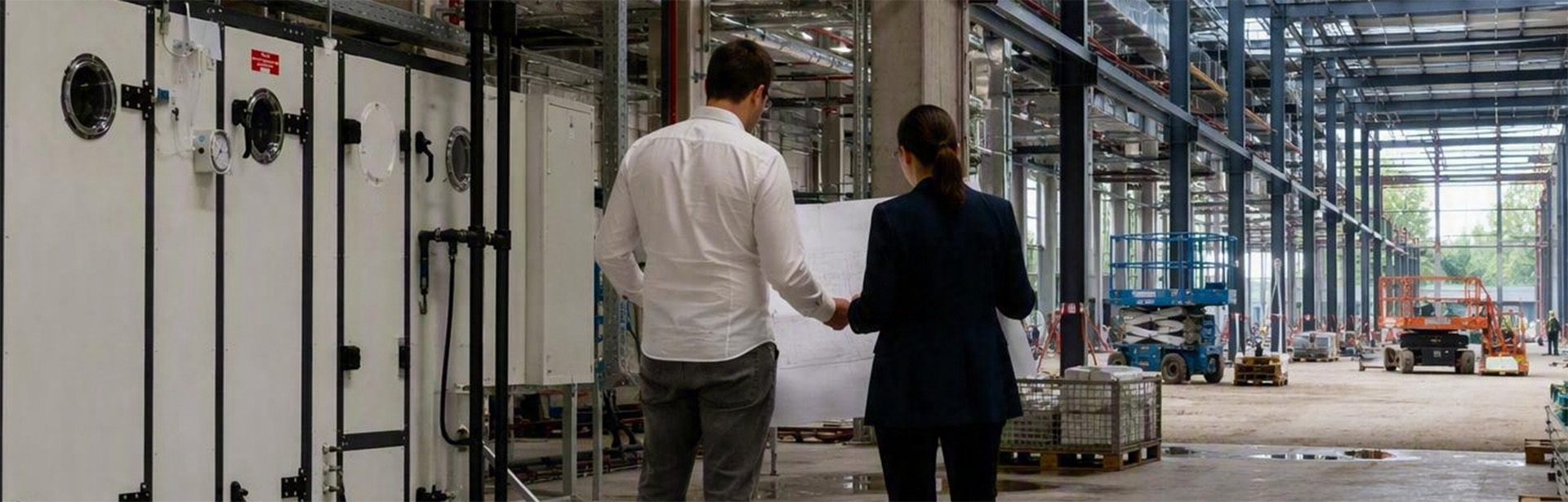
Use Existing Space Instead of Building
New Ones Brownfield as a Sustainable Option
The Future Lies in Our Existing Portfolio
Growing Without Starting from Scratch
The decision to choose an existing site as a brownfield project is no longer solely a matter of investment costs. Strategic, economic, and sustainability-related factors make the redevelopment of existing sites an attractive alternative to building from scratch on a greenfield site.
A key advantage of the brownfield approach is the significantly faster implementation. Existing buildings, utility connections, and infrastructure continue to be used. At the same time, permitting processes are less time-consuming than with a completely new development, since existing uses can be retained as a foundation. As a result, additional production capacity becomes available much sooner than with comparable greenfield projects.
Brownfield: Building the Future on Existing Foundations
The brownfield approach also makes economic sense. Investments already made in land, buildings, and infrastructure are retained and further developed in a targeted manner. Existing facilities and assets are not necessarily replaced, but rather integrated into the adapted site and adapted to meet new requirements. This reduces capital requirements and shortens the payback period for investments.
At the same time, brownfield projects can meet key requirements for sustainable site development. The continued use of existing buildings reduces the need for new resources and avoids, for example, additional land sealing. Material consumption and so-called “gray emissions” decrease significantly, as large portions of the existing building stock are reused. Brownfield projects thus make a direct contribution to achieving ESG goals.
Existing Values, New Perspectives
In addition to the structural advantages, existing value-creation networks are preserved. Production, logistics, and supplier structures have grown over the years and are closely tied to the location. They offer a competitive advantage. Experienced employees, regional partners, and existing expertise remain available and ensure the site’s operational efficiency. Another advantage lies in the greater flexibility of investment decisions. Brownfield projects can be implemented in multiple phases. Investments can be spread out over a longer period, and expansions can be carried out as needed. This phased approach allows for a significantly more flexible response to market changes and shifts in demand than a one-time, large-scale investment in a new facility.
Transformation During Ongoing Operations
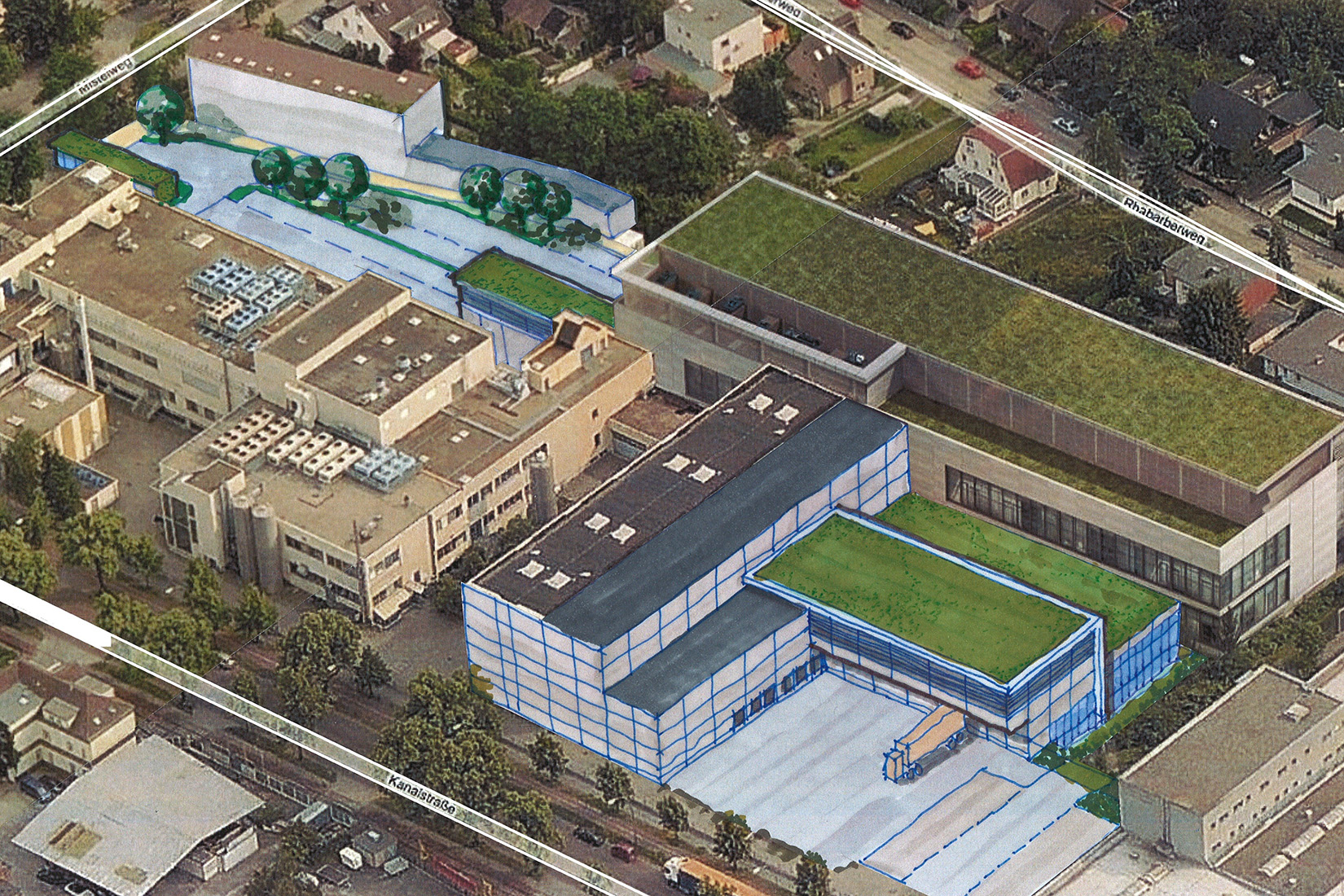
In our experience, the greatest challenge of a brownfield project lies not in planning the objectives, but in implementation. Unlike a new construction project, the transformation takes place while operations continue. Machinery and production processes keep running, and customers continue to be supplied. The success of a brownfield project therefore depends on precise planning of the individual implementation steps. Through intelligent construction phases, temporary relocations of functions, and the use of existing expansion areas, operational capability is maintained throughout the entire transformation. Production interruptions are minimized, and new capacities are brought online in stages. In concrete terms, this means that growth and transformation become possible without taking on the risks associated with a complete restart.
A Shortage of Industrial Sites Is Changing the Outlook
The availability of suitable industrial sites is increasingly becoming a decisive location factor. In thriving regions of Germany and Europe, suitable greenfield sites are scarcely available on an economically viable basis. At the same time, land prices, permitting requirements, and development costs are rising steadily.
In many cases, therefore, the further development of existing sites is not only the more economical solution but also the only realistic way to create additional capacity in a timely manner. This also changes the perspective on existing plants. They are no longer viewed as a limitation but as a strategic asset. Those who consistently leverage the potential of their existing portfolio lay the foundation for sustainable growth without having to start from scratch.
