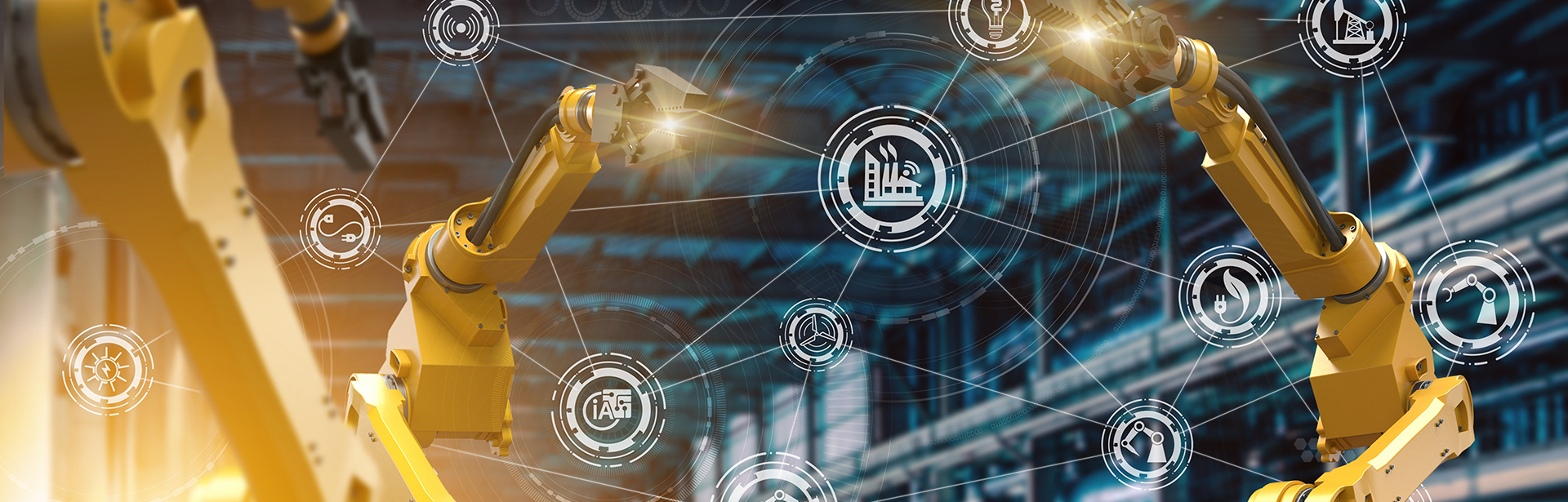
SAP DM shop floor integration – Machines that talk
We connect machines and PLCs directly to SAP Digital Manufacturing via the SAP Production Connector. Edge is specifically used for offline capability and resilient data processing – ensuring stable processes and reliable real-time OEE tracking.


Key points at a glance
- Challenge: Any MES is blind without machine connectivity: production quantities are entered manually, downtime is detected too late, and OEE values are based on estimates rather than real-time data.
- Solution: We connect machines and PLCs directly to SAP Digital Manufacturing via the SAP Production Connector. Edge is specifically used for offline capability and stable data processing – ensuring reliable real-time data and well-founded OEE analyses.
- Outcome: Automated real-time tracking of quantities, times, and machine statuses. OEE values are calculated automatically, and malfunctions are immediately visible.
- io benefit: We have hands-on experience with CNC machines, mixers, and PLCs. We integrate OT and IT in a way that ensures the data in production is actually accurate.
What is shop floor integration?
Shop floor integration connects the machine level (OT) with SAP Digital Manufacturing. Quantities, times, and machine statuses are automatically recorded using SAP Production Connector and protocols such as OPC UA – the foundation for paperless manufacturing, real-time transparency, and automated OEE.
- Which machines and controllers should be connected?
- Which protocols (e.g., OPC UA) and data points are available?
- Where are edge components needed for older equipment?
- How is OEE calculated automatically and comparably?
- How is the connection designed to be OT-secure?
Areas of focus for shop floor integration
Machine connection via PiCo & OPC UA
We connect PLCs and machine controllers directly to SAP DM via the SAP Production Connector and standard protocols such as OPC UA – for automated data collection instead of manual entry.
Automated production & machine data (BDE/MDE)
Feedback, counters, and downtime causes are automatically fed into the MES – for paperless manufacturing and reliable analyses without data discontinuity.
Edge computing & retrofitting
Retrofitting enables the connection of older machines, e.g., by retrofitting sensors. Edge computing enables local data buffering and offline capability before data is transferred to the cloud.
OT security & network architecture
We design the integration with a focus on network segmentation and OT security to ensure that the machine level communicates securely with the cloud.
Data Model, OEE & Key Performance Indicators
We define a consistent data model for quantities, times, and machine statuses so that OEE and KPIs are calculated automatically and comparably.
Process model in practice
Machine inventory
Together with you, we identify control types, interfaces, protocols, and data points for each system as the basis for the connection.
Connectivity concept
We define the Production Connector/OPC UA architecture, edge deployment, and the data model for the relevant signals.
Connection & mapping
We configure the connectors, map machine signals to SAP DM objects, and set up the data flows.
Testing & validation
We verify data quality, latency, and OEE calculations against actual conditions on the shop floor.
Rollout & operation
We roll out the connection for additional systems and hand them over to monitored operation.
Typical use cases
Replacing manual data entry
Quantities and times are still being entered manually. The integration automates data collection and improves data quality.
Legacy machine fleet (retrofitting)
Older control systems are connected to SAP DM through retrofitting and standardized interfaces – without the need for complete replacement investments.
Creating OEE transparency
Machine statuses and downtimes are recorded in real time, meaning OEE can be calculated automatically and reliably.
Industry 4.0 initiative
The machine level is tapped as a data source to build real-time use cases on SAP DM.
Added value of io

Accurate
data
Automated data collection, rather than manual entry, provides reliable quantities, times, and statuses.

Older equipment
included
OPC UA connects existing machine fleets without replacing them.

Automatic
OEE
Key performance indicators are generated in real time from machine data rather than from manual evaluations.

OT
meets IT
Our practical experience with PLCs and machines ensures a robust, secure connection.
Frequently asked questions
We have a very old pool of machines. Can this be connected to SAP DM? ×
Yes. Even older control systems can be connected through retrofitting (e.g., sensor retrofitting) or using middleware as a translation layer. Edge components are also used for reliable data transmission to SAP Digital Manufacturing – to ensure offline capability and stable data processing.
What is SAP Plant Connectivity (PCo)? ×
SAP Plant Connectivity (PCo) is an established SAP component for connecting machines, PLCs, and data sources. The Production Connector is increasingly being used in modern SAP DM architectures to handle the connection and processing of machine data. It integrates data from various protocols (e.g., OPC UA) into the SAP data model and enables the automated collection of quantities, times, and statuses.
How is OEE calculated? ×
SAP DM calculates OEE in real time based on the automatically captured machine data (availability, performance, quality) – with no need for manual evaluations on paper.
Do we have to connect all machines at once? ×
No. We start with an inventory and prioritize the equipment with the greatest potential for improvement. The integration is then rolled out step by step to include more machines.
How secure is the machine-level integration? ×
We design the architecture using network segmentation and OT security principles so that the machine level communicates with the cloud under controlled and secure conditions.
How does shop floor integration relate to the implementation? ×
The integration provides the real-time data on which operator guidance, order control, and key performance indicators in SAP DM are based. It is planned and rolled out in conjunction with implementation.
Schedule a consultation with an expert
We’ll work together in a 30-minute session to identify which area of action offers the greatest leverage for your current situation – and whether a structured pilot approach makes sense for you.