
Project Management @ io
Planning, Design, and Coordination with Purpose and Reason
Successfully Managing Large-Scale Projects
io Delivers That "Wow" Factor on Construction Sites
Large-scale projects in the construction industry rest on three pillars: professionalism, strategic planning, and effective implementation. Success depends on precise procedures—from detailed needs analysis and feasibility studies to selecting the right partners and leveraging digital technologies.
Particular attention should be paid to early coordination of the risk management strategy and the careful selection of an interdisciplinary planning team. After all, these steps help identify potential obstacles early on and effectively overcome them with the right planning solutions.
io offers clear organizational structures, transparent processes, and close collaboration with all project stakeholders—all of which benefit construction projects: io steers them toward success.
When you need to get things done quickly
Success Factors for Fast-Track Projects
Fast tracking is the proverbial express train of project management. This method accelerates processes to enable the achievement of ambitious time-sensitive goals. By carrying out various activities or entire project phases in parallel, fast tracking significantly shortens the implementation time—without compromising quality, though this requires careful planning of requirements. In fast-tracking, the precise definition of user requirements in particular forms a solid foundation for preventing delays later on. In addition, the defined user requirements set a clear course that all stakeholders can follow.
In addition, clear rules are needed regarding project execution, particularly concerning the approval of planning progress, the handling of change requests, and the procurement process for construction services. Communication is essential in this regard. Those who rely on fast-tracking must regularly exchange information with all stakeholders. Ideally, daily Scrum meetings are held to ensure that the project is heading in the right direction—and that the trade-off between quality, time, and cost remains in balance.
However, due to the speed of the method, it is difficult to perform a complete cost estimate early on. For user requirements or planning issues, assumptions are therefore made initially, while the risk budget serves as a safety net and indicates the maximum allowable budget. It sets the maximum allowable loss threshold. The key to this is having expert teams capable of mastering the challenges of accelerated processes, while flexible resources ensure that the project can always adapt to changing circumstances. On top of that, risk analysis monitors the project. This allows obstacles to be identified early on, so that, if necessary, countermeasures can be taken promptly and with targeted actions.

- Direct Point of Contact for Customers
- Project Management io
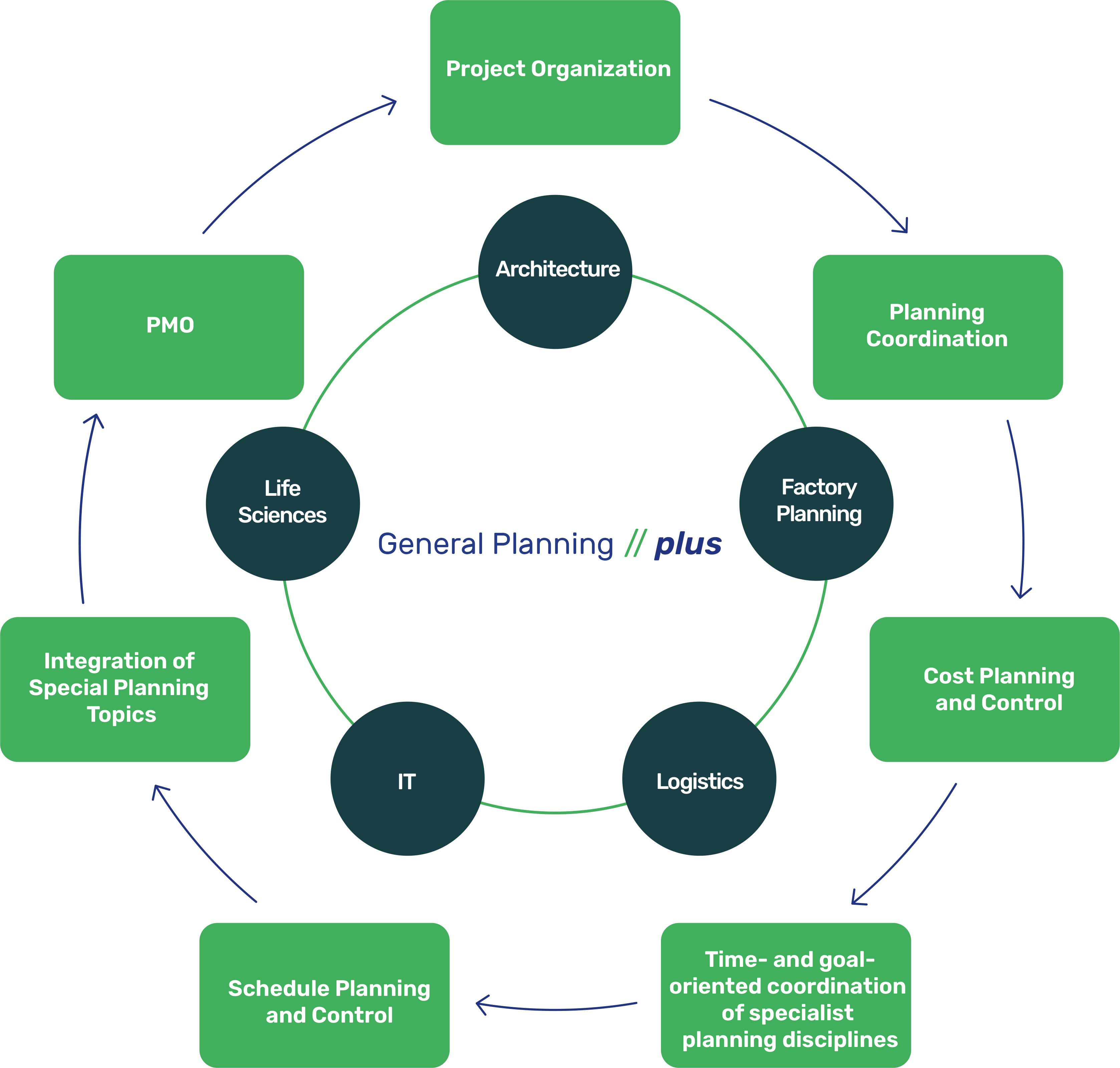
- Coordination of processes and workflows within the project
- Overall coordination
- Negotiation and contract management

- Timely and goal-oriented coordination of planning issues across subprojects
- Risk management
- Support for change and claim management

- Cost Estimation by Service Phase
- Variances and Risk Budget
- Cash Outflow Planning
- Value Engineering
- Timely and Goal-Oriented Performance Management
- Interface management
- Coordinating Information and Decisions