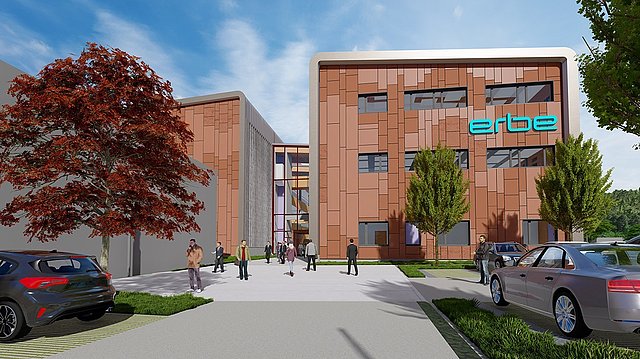
MEP & utility systems planning
We plan comprehensive, cross-disciplinary MEP – clash-free in 3D BIM and consistently aligned with your factory or logistics layout as well as your process requirements.


Key points at a glance:
Challenge: Rising energy costs, strict ESG requirements, and highly complex production needs (e.g., clean rooms, technical gases) demand highly integrated utility systems.
Solution: Integrated MEP planning (HOAI 1-9 (the Official Scale of Fees for Services by Architects and Engineers in Germany)) that seamlessly integrates heating, ventilation, air conditioning, and electrical engineering into building physics and plant design – fully modeled in 3D BIM.
Result: Absolute supply reliability, a significant reduction in the carbon footprint through intelligent energy strategies, and no costly track clashes on the construction site.
Benefit: Form follows flow: Our philosophy is that building services unconditionally adapt to your process requirements – and not the other way around.
What does industrial MEP encompass?
Mechanical, electrical and plumbing equipment (MEP) in industrial construction goes far beyond traditional room climate control. It is the backbone that makes complex value-added processes possible in the first place. This includes reliable systems in all aspects: Electrical engineering and safety technology, technical fire protection, high-precision heating, ventilation, refrigeration, and air conditioning technology, sanitary engineering (HVAC), building automation (BA), as well as the supply of individual process media.
Planning of the trades in accordance with cost groups 410 to 490 (pursuant to DIN 276)
Strict alignment of supply engineering with the production and logistics layout
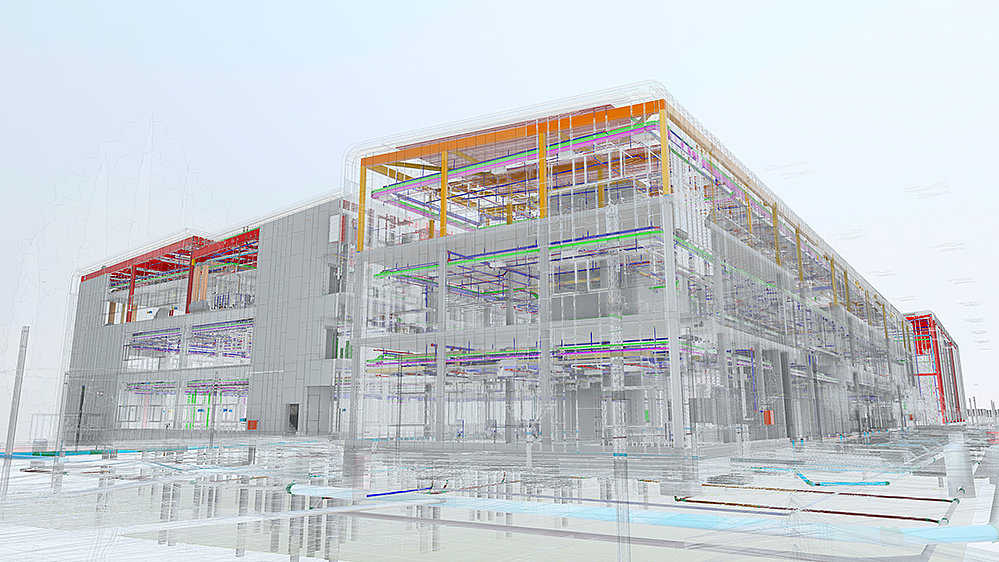
BIM-supported planning to ensure absolutely no clashes between media runs, routes, and systems


Installation of the new recooling system on the roof as part of the Erbe project.
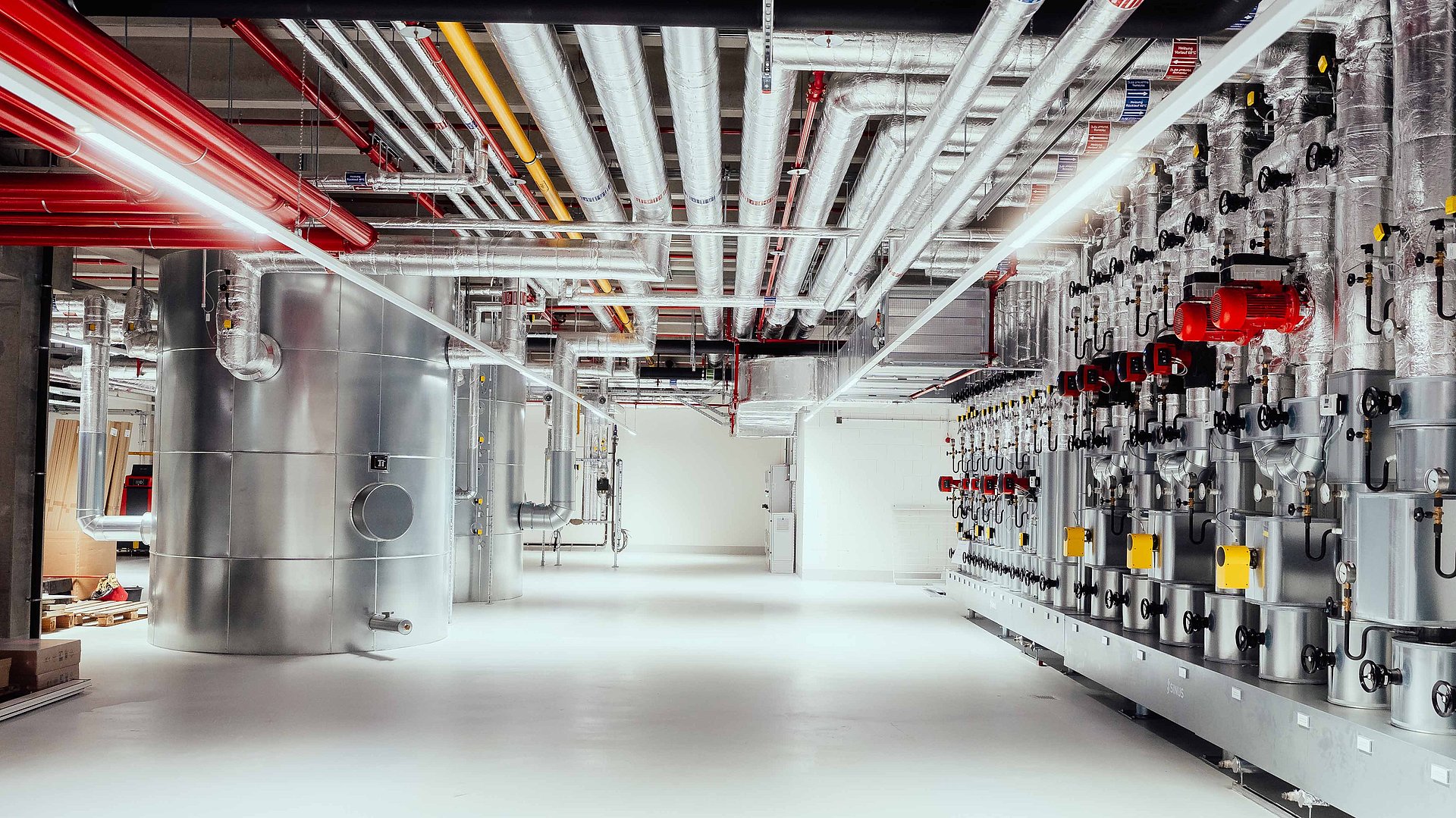
A high-performance sprinkler control center was among the systems installed as part of the MEP installation to guarantee seamless and automated firefighting in all building sections in the event of an emergency.
Our fields of activity
Basic design
Basic design is where we develop our basic technical planning. The aim is to make preliminary system decisions (e.g. heating and cooling systems, ventilation design), carry out rough dimensioning and create a durable basis for cost and schedule planning.
Detail design
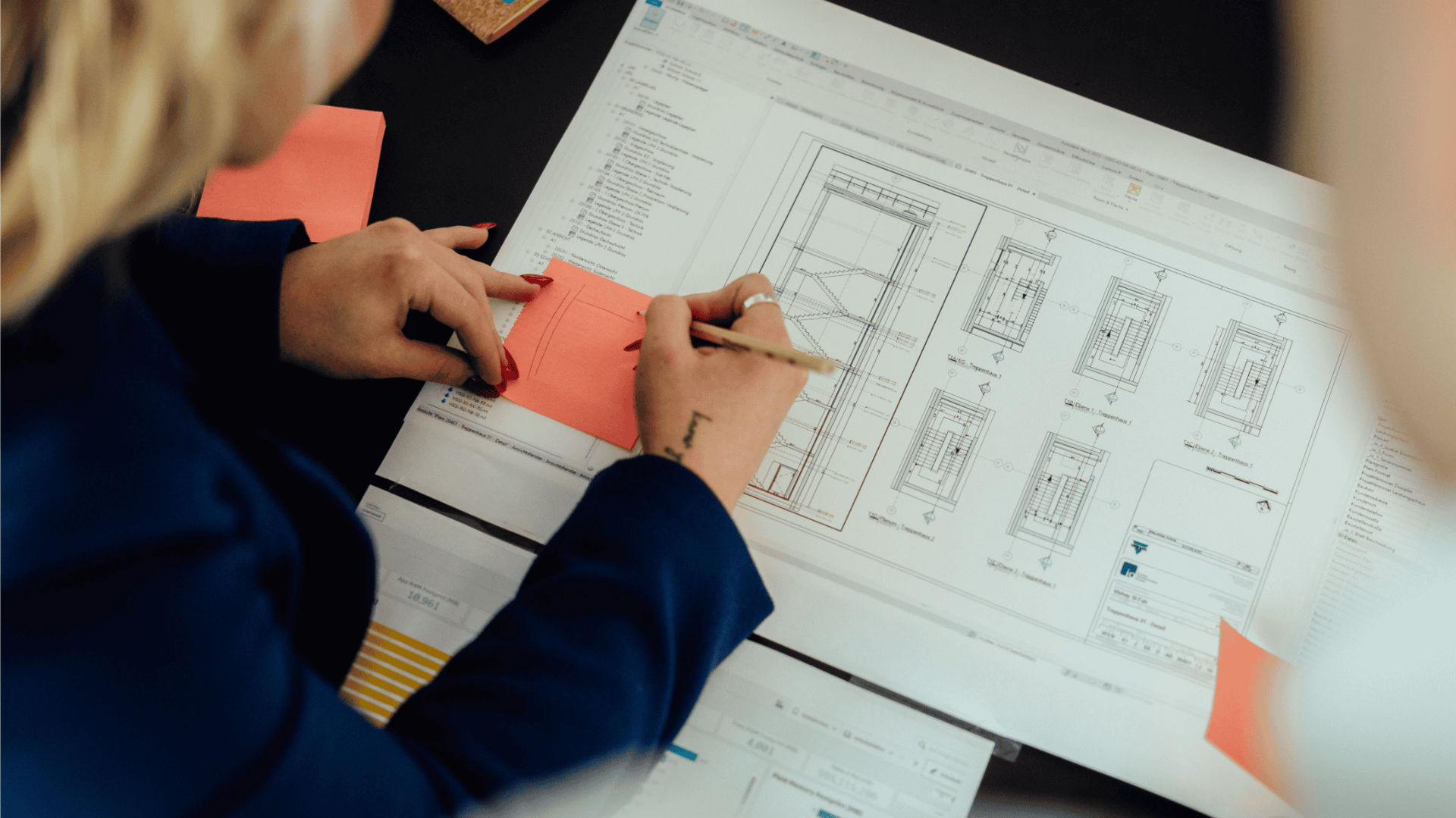
In the detailed design phase, we develop all technical systems and components to the point of construction readiness. This includes implementation plans, diagrams, calculations and tender documents. This phase ensures that all requirements are clearly defined and that implementation is guaranteed to run smoothly.
Technical due diligence
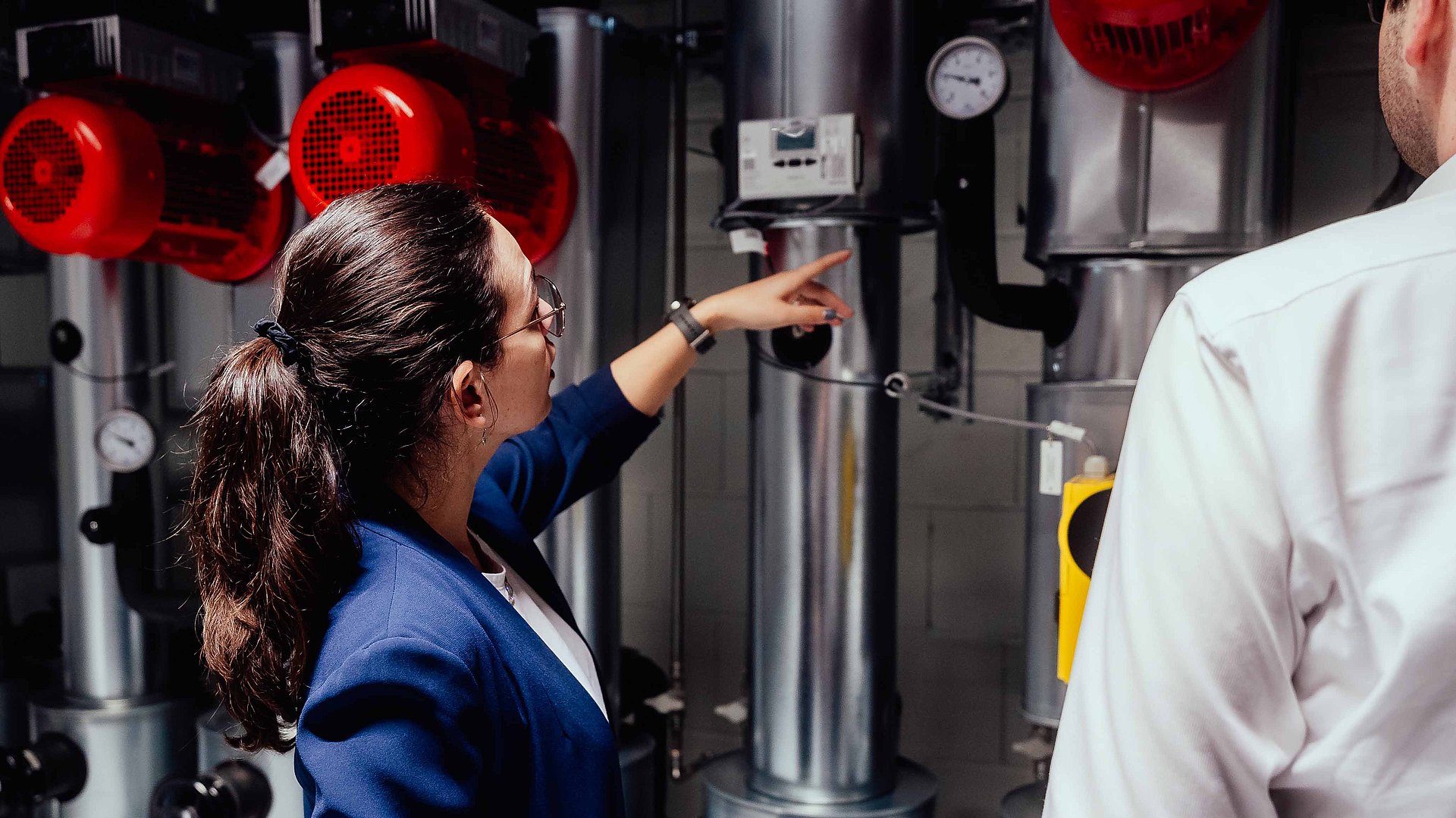
We assess the technical state of your building, technical systems or project as part of technical due diligence. We analyze the MEP systems in terms of functionality, energy efficiency, maintenance requirements, and potential investment risks – providing a sound basis for decision-making during purchase, renovation, or retrofitting.
Konzeptstudien
As part of concept studies, we develop and assess various technical solutions in order to create a sound decision-making basis for further planning. Our focus is on evaluating alternatives in terms of technology, interactions between MEP and processes, cost-effectiveness, and sustainability – always tailored to your specific project requirements.

Specialist construction management
During the construction phase, our specialist construction management team ensures that the MEP planning is correctly implemented. We monitor quality, deadlines and costs, coordinate the contractors and ensure that all technical services are carried out in accordance with standards and in line with acceptance requirements.

Sustainability
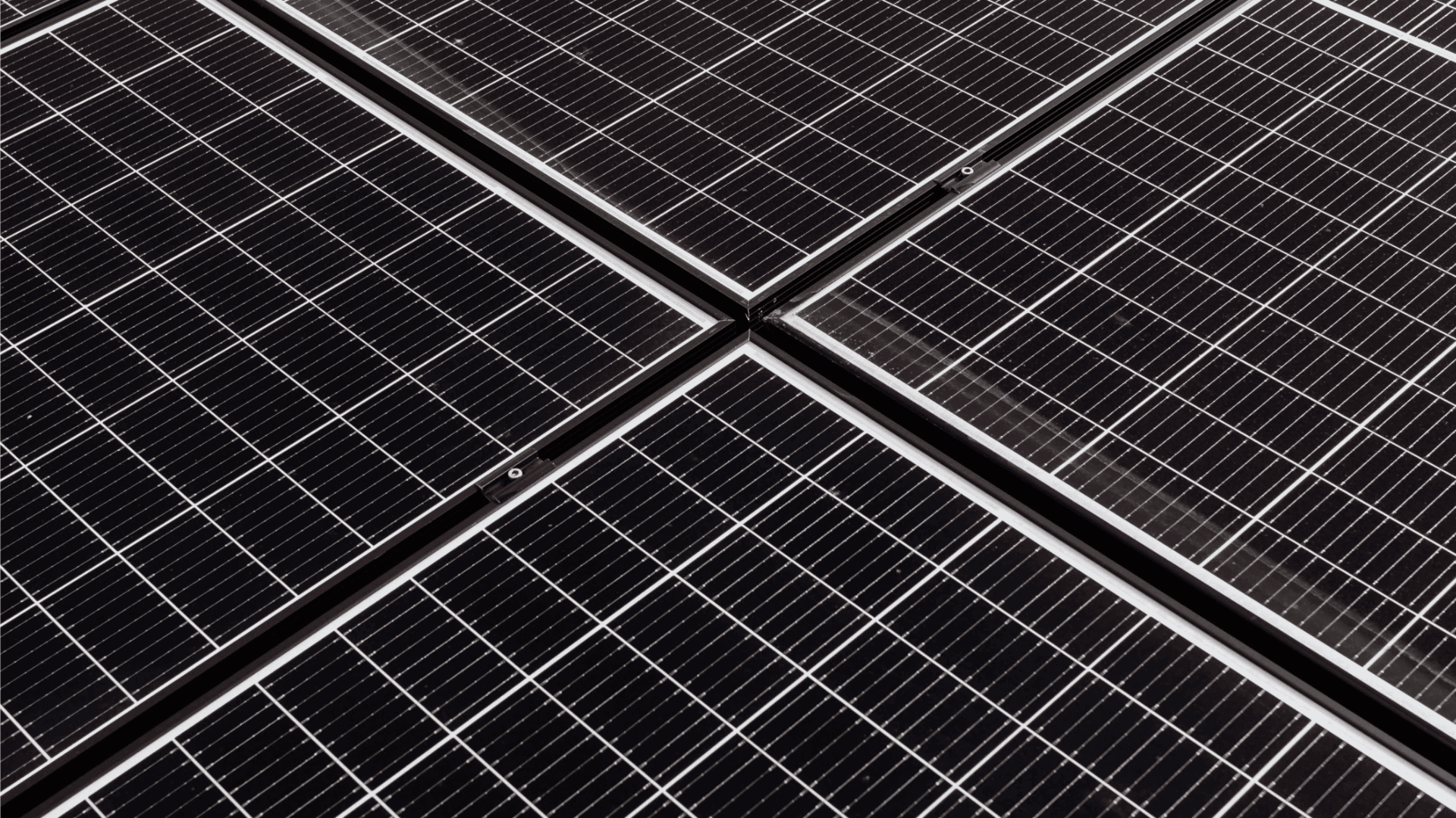
Our sustainability strategy focuses on energy-efficient, resource-conserving, and durable systems. We ensure the use of renewable energy, energy recovery, reduction of CO₂ emissions, and consideration of requirements in certification systems such as DGNB, BREEAM, or LEED.
BIM (Building Information Modeling)
We use both closed BIM and open BIM at io as digital planning methods, in which all relevant MEP data is captured, networked, and – at the operator’s discretion – can be utilized throughout the entire life cycle. BIM improves coordination when used in MEP and enables precise clash detection, significantly improving planning efficiency.
Engineering Excellence for Industry
We provide the full range of building systems engineering services through an integrated, BIM-based approach.
Energy strategies & decarbonization
Energy strategies & decarbonization
Sustainability strategies for future-ready factories (ESG).
Analysis of energy load profiles, integration of renewable energy sources, utilization of industrial waste heat, and development of carbon-neutral utility and infrastructure concepts for both existing facilities and new construction projects
Why choose MEP with io?

Clash-free
planning
BIM integration
We identify routing and interface clashes early in the model through cross-trade 3D planning. This allows planning errors to be identified before construction begins, avoiding costly rework and delays.

Measurable ESG compliance
CO2 reduction
We design energy strategies that measurably reduce the CO2 footprint, lower operating costs, and optimize energy flows.

Sustainable operational reliability
Maximum availability
Whether it’s cold chain logistics or pharmaceutical clean rooms – we design systems to be so redundant and robust that your critical processes run fail-safe.

All HOAI service phases
End-to-end
From preliminary planning through draft planning to contract award and project management: We guide your MEP projects to success across all service phases.
FAQ
Why is MEP planning more complex for industrial buildings than for commercial properties? ×
Process requirements dominate the building in industry. Machines require massive amounts of electricity, cooling, compressed air, or ultra-pure media. The MEP must absorb these extreme peaks, be designed to be fail-safe, and integrate seamlessly into the often strict safety or hygiene zones (GMP).
How does io MEP planning help achieve climate goals (ESG)? ×
We create holistic energy strategies. Before we size systems, we assess the potential for utilizing waste heat from production facilities and integrate heat pump technologies and photovoltaics. This results in significant savings in primary energy and operating costs.
What role does BIM play in your MEP planning? ×
Quite simply, a crucial one. We plan the entire building services (systems, routes, pipes, ducts) as a 3D model in direct coordination with the architectural and fabrication models. This enables “clash detection” during the planning phase and guarantees smooth installation on-site.
Schedule a consultation with an expert
We’ll work together in a 30-minute session to identify which area of action offers the greatest leverage for your current situation – and whether a structured pilot approach makes sense for you.