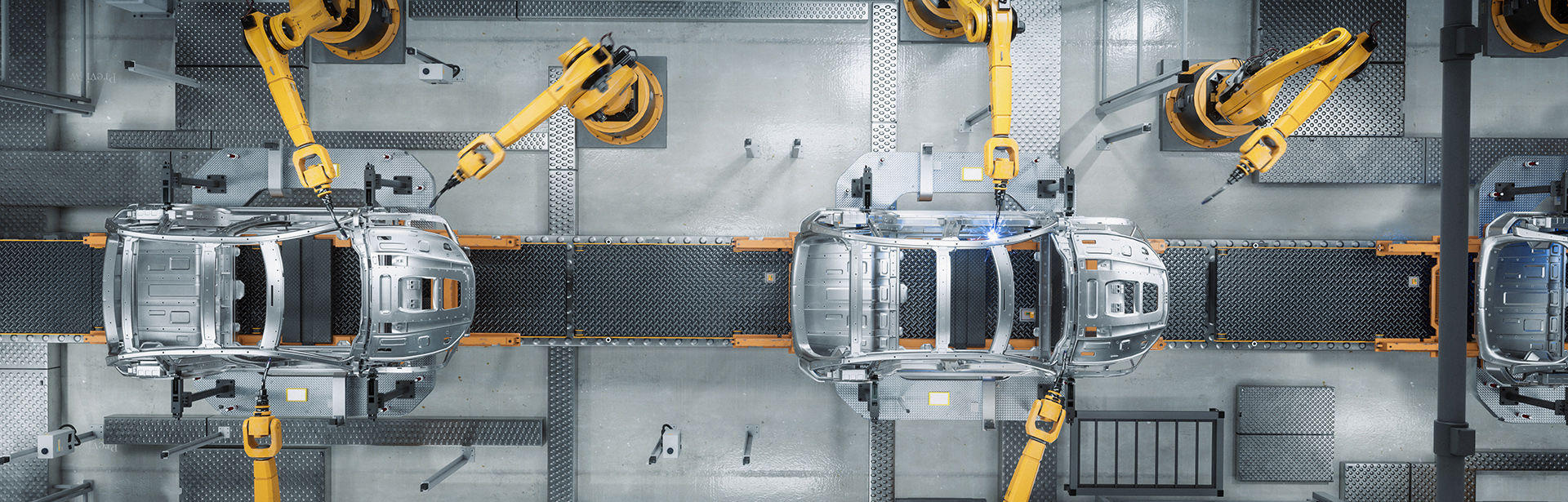
SAP DM for discrete industries – Assembly & traceability
We configure SAP Digital Manufacturing using best practices for mechanical engineering and the automotive industry: guided assembly, component genealogy, serialization, and verifiable error logging.


Key points at a glance
Challenge: Seamless traceability and worker guidance are essential in assembly and variant-based manufacturing in mechanical engineering and the automotive industry – manual processes cannot reliably deliver this.
Solution: We configure SAP Digital Manufacturing using best practices for discrete manufacturing: guided assembly, component genealogy, serialization, and error logging.
Outcome: Seamless traceability from component to assembly, stable assembly processes, and reliable quality data – even where there is a high degree of product variation.
io benefit: We understand assembly, sub-assemblies, and traceability requirements from real-world mechanical engineering and automotive projects and configure SAP DM to closely align with your processes.
What does SAP DM for discrete industries mean?
Discrete manufacturing produces countable units – components, sub-assemblies, and devices. SAP Digital Manufacturing provides guided assembly, complete genealogy, and serialization for this purpose. This results in reproducible processes and verifiable traceability, even where there is a high degree of product variation.
- How are assembly steps guided and verified at the workstation?
- Which components, batches, and serial numbers are installed?
- How is the as-built status of each unit documented?
- How are errors, blocks, and rework managed?
- How does production remain stable and auditable despite there being many variants?
Areas of action for discrete manufacturing
Guided assembly & worker guidance
Assembly processes are mapped as guided steps in the POD – with work instructions, installation verifications, and inspections directly at the workstation.
Rework & defect tracking
We map defect tracking, work stoppages, and rework loops so that quality irregularities are accurately recorded and controlled.
Component genealogy & traceability
We ensure complete traceability of assembly relationships: Which component, which batch, and which serial number is installed in which assembly.
Variant production & automotive standards
We support high-variant production and common requirements from the automotive sector to ensure stable, verifiable processes.
Serialization & identification
In terms of installation relationships: Which component, which batch, and which serial number is installed in which assembly.
Mechanical pre-production
Upstream manufacturing steps such as machining and parts production are also integrated – serving as the foundation for end-to-end processes all the way through to final assembly.
Process model in practice
Process mapping
We map the assembly structure, sub-assemblies, variants, and inspection and traceability requirements of your discrete manufacturing operations.
Best-practice mapping
We map your processes to the SAP DM standards for discrete manufacturing and define adjustments needed.
Configuration
We configure guided assembly, genealogy, serialization, and error logging in the core template.
Testing & training
We validate the workflows with the business departments and train key users on the PODs.
Rollout & operation
We put the solution into production and roll it out to additional lines and locations.
Typical use cases
Machinery & plant engineering
High variety of variants and complex sub-assemblies. The goal is guided assembly with complete as-built documentation.
Automotive & suppliers
Strict traceability and quality requirements. The goal is auditable, serialized production.
Electronics & device manufacturing
Many components and serial numbers. The goal is clear genealogy and error tracking at the workstation.
Recall preparedness
In the event of a defect or recall, it must be quickly clear which units are affected – genealogy provides the answer.
Added value of io

Actionable
traceability
Data is not only recorded but structured in such a way that it can be used directly during operations and in an emergency.

Stable
assembly
Guided worker instructions reduce errors and ensure reproducible processes even where there is high variability.

Verifiable
quality
Error tracking and rework are clearly documented – reliable for audits and customers.

Practical
configuration
Our experience in discrete manufacturing ensures process-oriented, accepted solutions.
Frequently asked questions
For which industries is SAP DM for discrete manufacturing suitable? ×
Primarily for mechanical and plant engineering, the automotive industry and its suppliers, as well as electronics and equipment manufacturing – anywhere where the focus is on assembly, sub-assemblies, variants, and traceability.
What exactly does “component genealogy” mean? ×
The genealogy provides a complete record of which component, batch, and serial number was installed in which assembly – which is crucial for traceability and recall reliability.
Does SAP DM support a high degree of variant diversity? ×
Yes. Guided assembly and the core template enable stable mapping of processes with a wide range of variants, ensuring that workers are correctly guided for each variant.
How are defects and rework mapped? ×
We configure defect logging, locks, and rework loops so that quality deviations are recorded and controlled directly at the workstation.
Is this compatible with automotive requirements? ×
Yes. We support common traceability and quality requirements from the automotive sector for auditable, serialized processes.
How does this relate to shop floor integration? ×
Guided assembly and genealogy are particularly powerful when machine data is automatically integrated. Shop floor integration provides the real-time foundation for this.
Schedule a consultation with an expert
We’ll work together in a 30-minute session to identify which area of action offers the greatest leverage for your current situation – and whether a structured pilot approach makes sense for you.