Factory Planning: Fundamentals, Methods, and Success Factors
Factory planning is the key to efficient, flexible, and future-proof production. Whether building a new facility or modernizing an existing one, processes can only be optimized, costs reduced, and competitive advantages secured through a clear strategy, structured planning steps, and the use of digital tools.
This article provides a comprehensive overview of all essential aspects of factory planning: from strategic decisions to concrete planning steps and the opportunities presented by digitalization and simulation.
What is factory planning, and why is it so important?
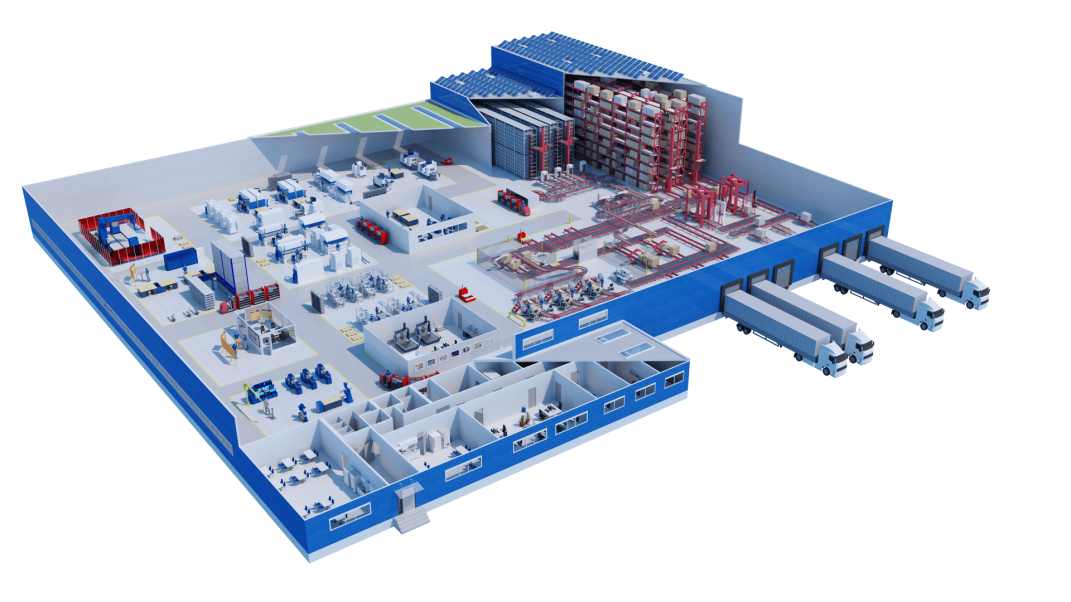
Factory planning involves the systematic design and optimization of production facilities. It begins with site selection, includes the planning of building and machinery layouts, and concludes with the commissioning of production processes. A well-planned factory enables efficient use of space, minimizes material flows, and ensures smooth transitions between the various production steps.
The importance of factory planning cannot be overstated. Well-thought-out planning brings numerous benefits:
- Cost savings: Reduction of investment and operating costs through optimal space utilization and material flow design.
- Increased efficiency: Shorter distances and optimized processes can reduce production times and resource consumption.
- Flexibility: An adaptable factory can respond quickly to market changes and integrate new products.
- Sustainability: Environmentally friendly production concepts reduce energy consumption and lower emissions.
- Competitive advantages: A well-planned factory enables shorter delivery times, better quality, and higher productivity.
This topic is particularly relevant for manufacturing companies looking to build a new factory or modernize existing facilities. Startups entering industrial manufacturing for the first time also benefit from sound factory planning.g.
Greenfield vs. Brownfield: Which Strategy Is the Right One?
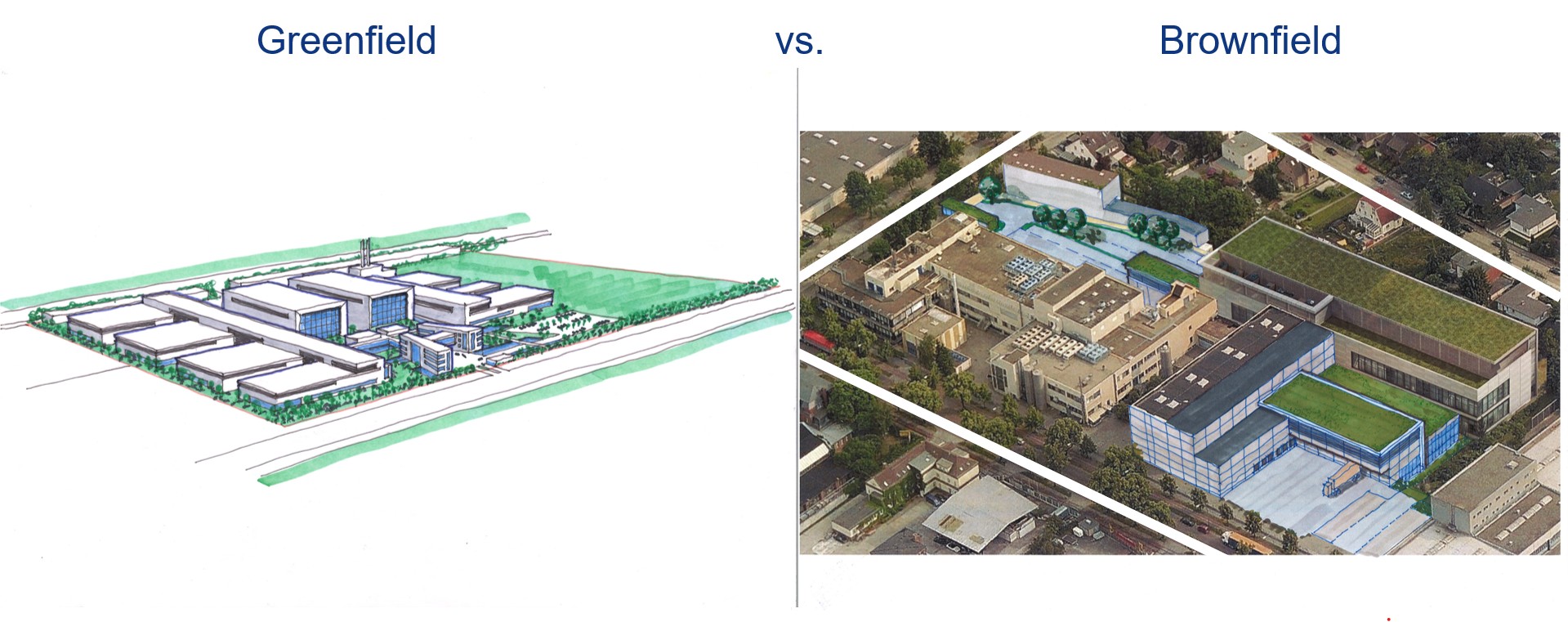
A key element of factory planning is deciding between a greenfield or brownfield approach. While greenfield projects involve building a completely new production facility on undeveloped land, brownfield planning focuses on modernizing or expanding existing factories.
Greenfield Factory Planning: Starting from Scratch
Greenfield projects offer maximum design flexibility, as there are no existing buildings or infrastructure to take into account. This allows for optimal planning in terms of layout, material flow, and energy efficiency. However, the costs of building a completely new factory are high, and the entire process can take several years. Site selection also plays a crucial role, as not every location has the necessary infrastructure or skilled workforce.
Brownfield Factory Planning: Optimizing Existing Facilities
Brownfield projects focus on the redesign of existing plants. Here, companies can utilize existing buildings and infrastructure, which is often more cost-effective and can be implemented more quickly. However, adapting to existing structures can present planning constraints. Old buildings may not be optimized for modern production processes, and the integration of new machinery may encounter spatial or technical obstacles.
Which strategy is best?
In practice, many companies combine both approaches. While greenfield projects are used to build new capacity or production lines, brownfield optimizations ensure that existing sites remain competitive.
The key phases of factory planning
1. Concept Phase
Stage 0: Strategy & Feasibility
- Value stream mapping and analysis
- Preliminary sizing of the factory
- Analyze the business case
Stage I: Concept Planning
- Development of production and automation concepts
- Development of an intralogistics concept
2. Detailed Planning
Phase II: Detailed Planning
Detailing of processes, material flows, and staffing plans
Detailed sizing of all areas
Preparation of a layout plan or detailed layout
Phase III: Pre-construction Planning, Bidding & Contracting
Preparation of bidding documents
Technical clarification with bidders and awarding of contracts
3. Integration Phase
Phase IV: Implementation
- Implementation support during construction and installation
- Start-up management and support during production ramp-up
- Commissioning of equipment and systems
Phase V: Operational Support
- Ongoing support after commissioning
- Support during ramp-up and operational optimization
Key components of factory planning
Material Flow and Layout Planning
Choosing the right layout is crucial. Integrated assembly planning helps align production requirements with efficient material flows and suitable layout concepts. Companies can choose between functional layouts, line layouts, cell-based structures, or flexible layouts, depending on production requirements and scalability.
Technology and Automation
Modern factories are increasingly relying on automation and digital technologies to make processes more efficient and flexible. Robots, networked machines, and intelligent control systems enable higher production speeds while maintaining consistent quality. Industry 4.0 and smart factories represent a fully networked production environment in which machines, software, and people work together seamlessly. This not only facilitates the control and monitoring of manufacturing but also contributes to error reduction and better resource utilization.
Simulation and Testing
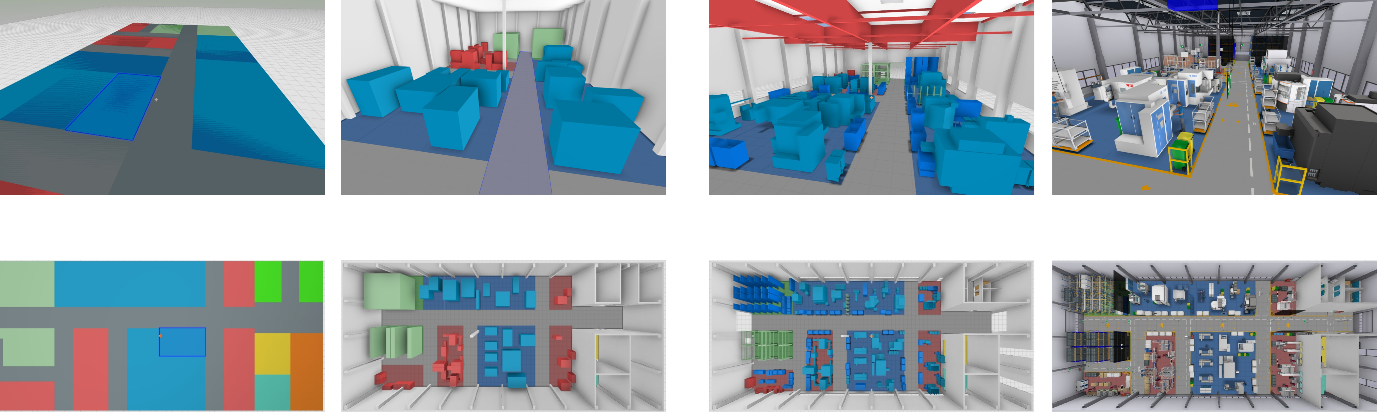
Factory planning is a complex process in which errors and misjudgments can result in high costs. By using simulation software, various layout and production scenarios can be tested before a decision is made.
Digital Twins and Virtual Reality
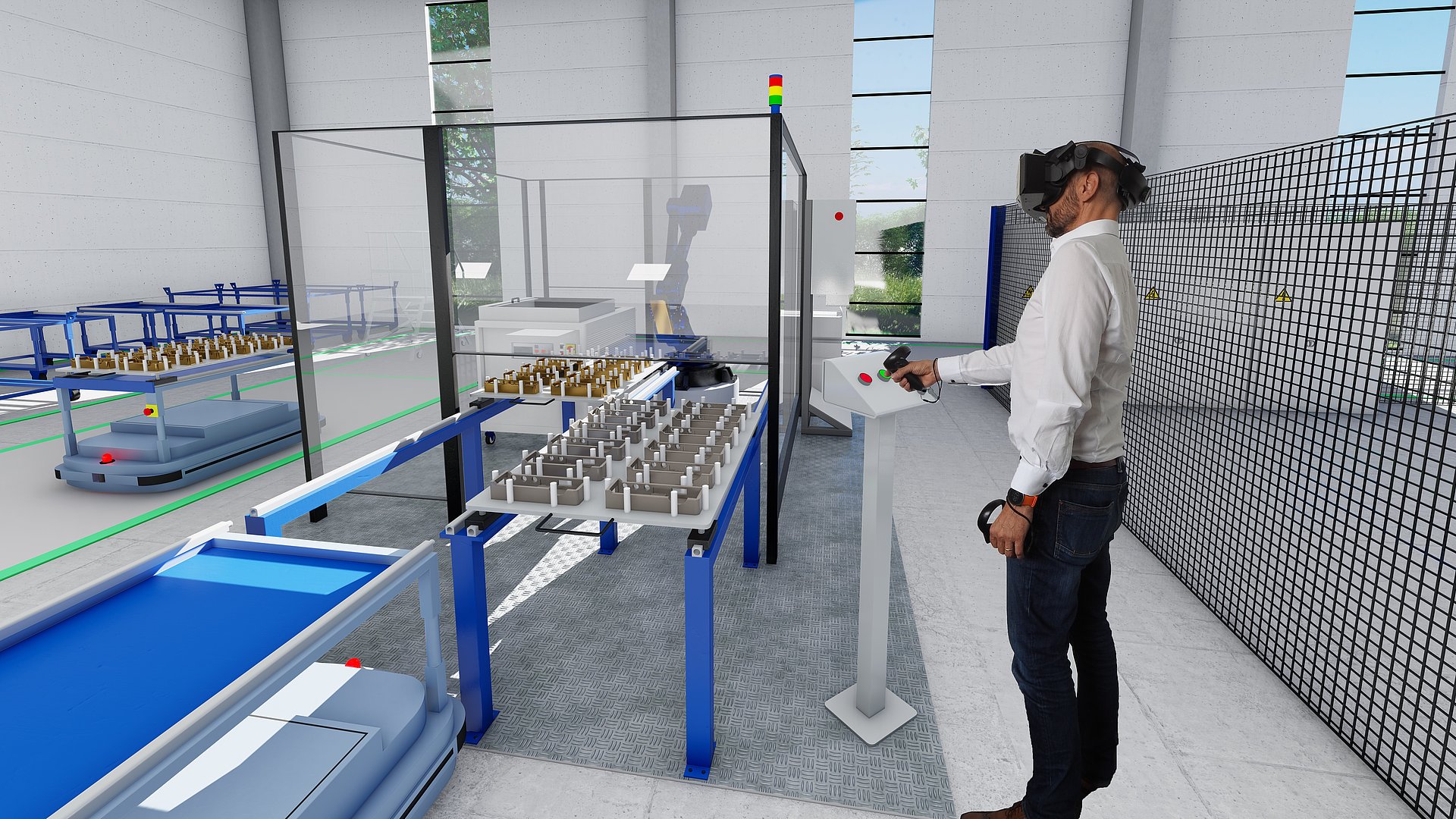
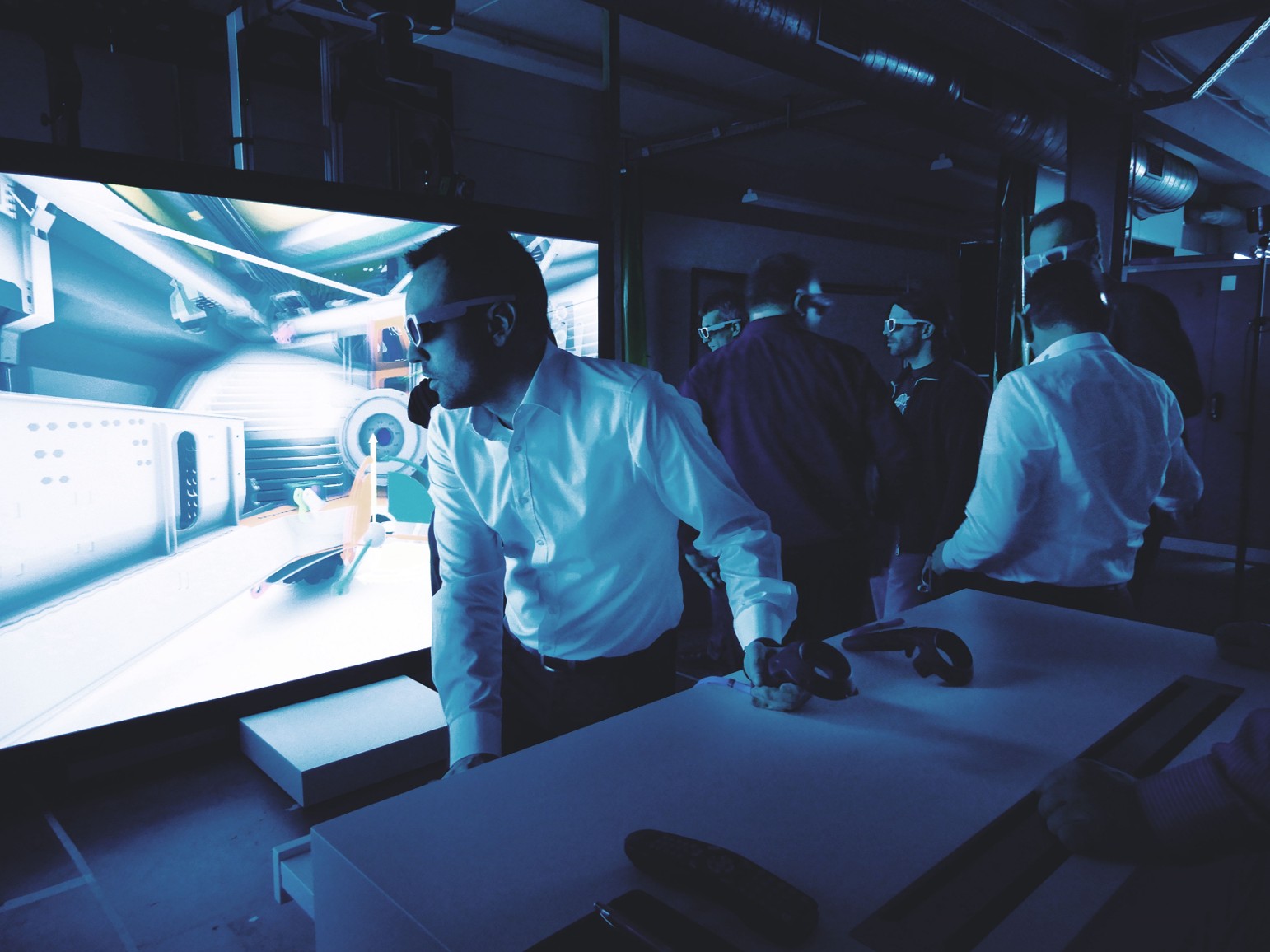
Virtual Reality is revolutionizing factory planning by enabling users to experience complex production facilities in a realistic and collaborative manner even before construction begins. Through immersive experiences, real-time interactivity, and collaborative features, all project stakeholders gain an immediate, shared understanding and can identify and resolve potential issues early on.
VR accelerates planning cycles, improves layout quality, and prevents errors through precise collision checks. Integration with digital twins also creates sustainable value throughout the entire factory lifecycle—from efficient assembly and training to ongoing optimization during operation. Overall, VR lays the foundation for flexible, safe, and future-proof factory planning that gives companies a strong competitive edge through time, cost, and quality advantages.
Challenges in factory planning
The biggest challenge in factory planning is cost management. Investments in buildings and machinery must pay off in the long term. A thorough feasibility analysis helps avoid unnecessary expenses and develop a sustainable financing strategy.
Flexibility is another key consideration. Markets are constantly changing, and production systems must be able to adapt quickly to new requirements. Modular planning makes it possible to restructure or expand production lines with minimal effort.
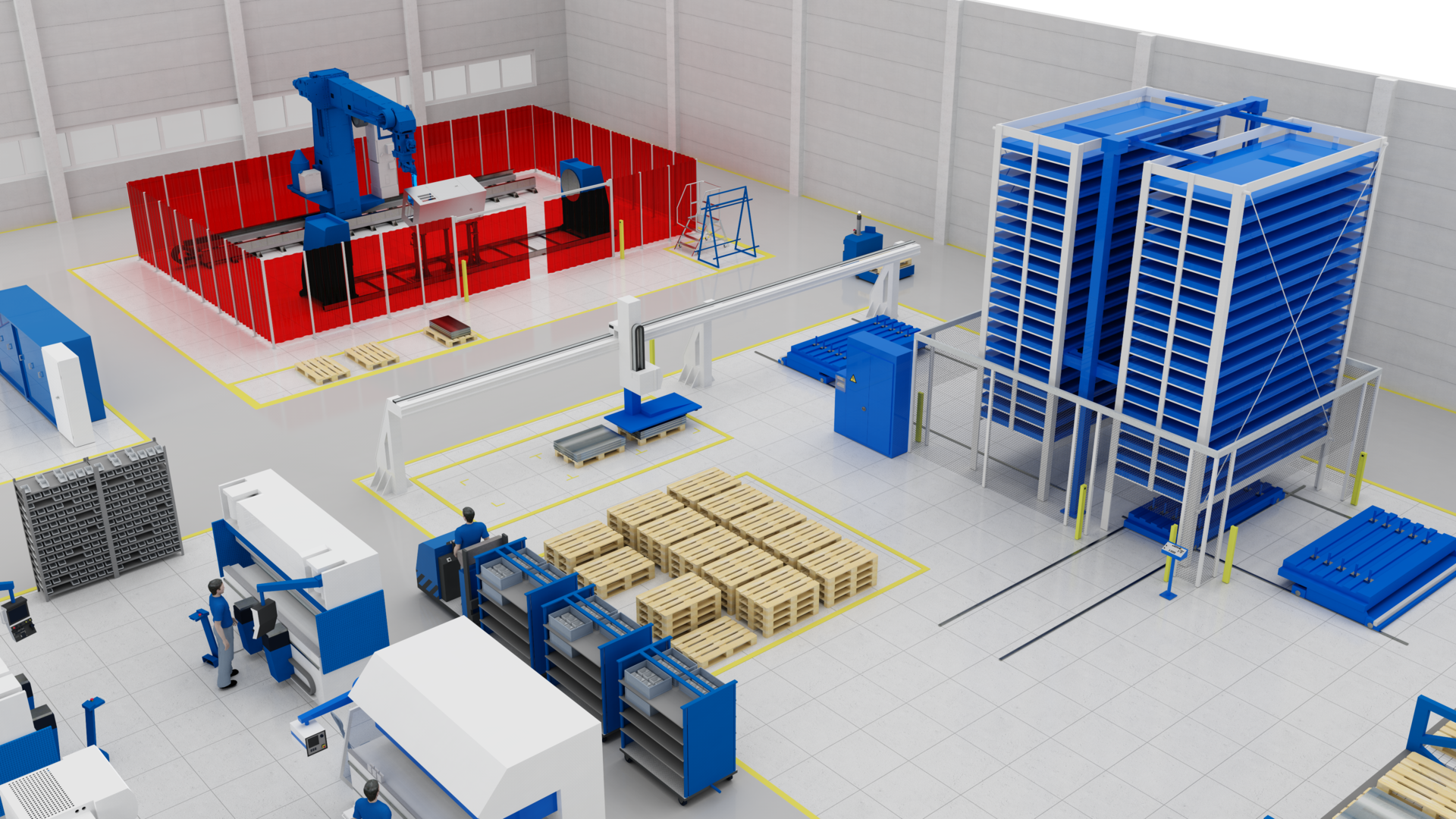
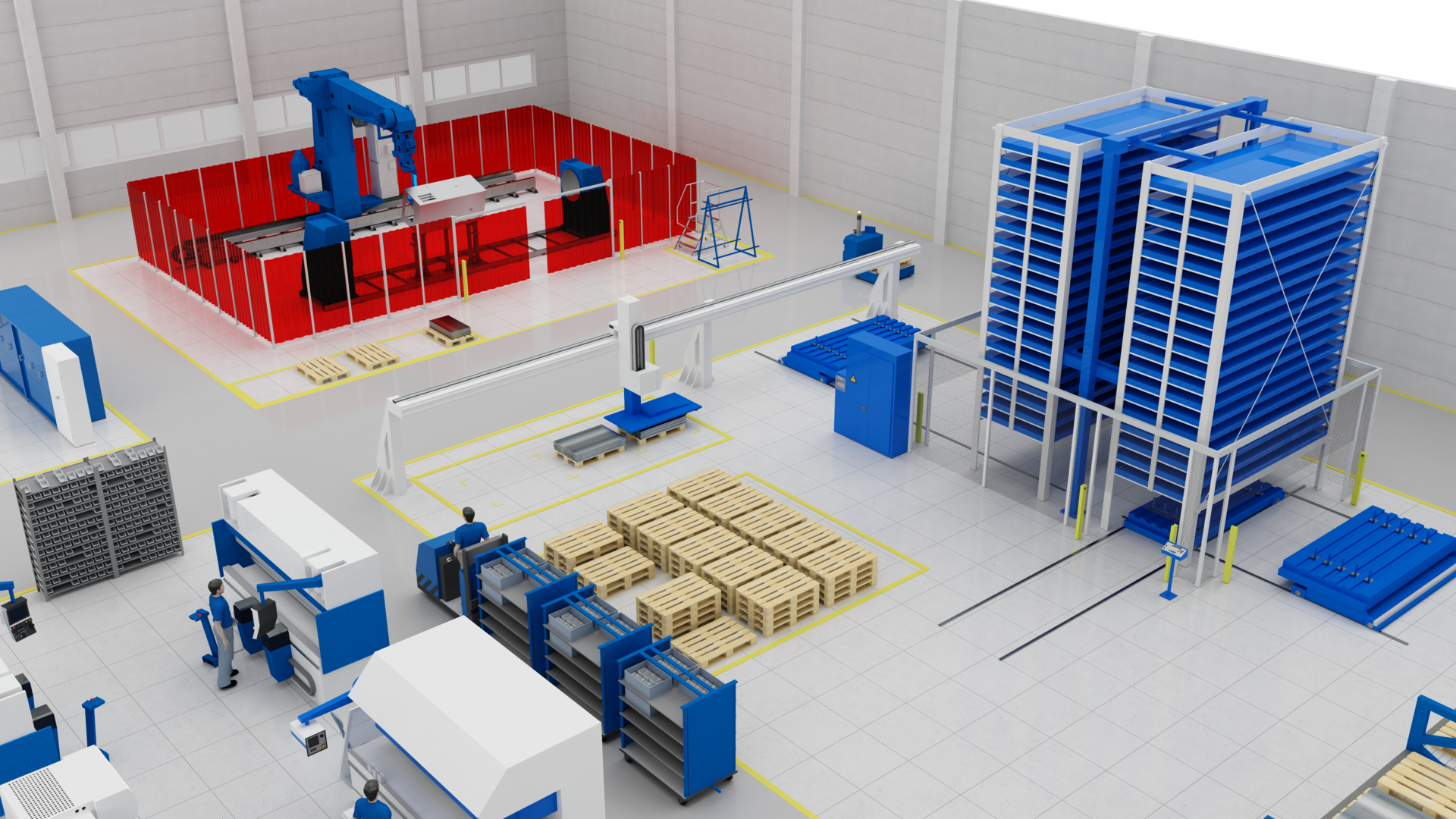
Benefits of Professional Factory Planning
Well-thought-out factory planning offers numerous benefits. Companies that invest in strategic and forward-looking planning benefit in the long term from more efficient processes, lower costs, and greater competitiveness. These benefits demonstrate that professional factory planning not only delivers short-term efficiency gains but also ensures a company’s long-term competitiveness.
Increased efficiency
Optimizing production processes leads to more efficient use of resources, shorter lead times, and reduced downtime. By strategically placing machines and workstations, unnecessary movement can be avoided, which significantly boosts productivity.
Cost reduction
Significant cost savings can be achieved through efficient use of space, optimized material flows, and reduced inventory levels. In addition, modern technologies enable energy-efficient production, which also lowers operating costs.
Flexibility and scalability
Professional factory planning takes future developments into account and ensures an adaptable production environment. Modular layouts and flexible manufacturing concepts make it possible to respond quickly to changing market demands or production volumes without the need for extensive renovations.
Competitive advantages
Companies with a well-designed factory layout can produce faster, offer shorter lead times, and ensure higher product quality. This strengthens their market position and increases customer satisfaction.
Sustainability and environmental friendliness
Modern factory design incorporates energy-efficient technologies and sustainable materials. The use of resource-efficient production methods reduces the environmental footprint and helps meet legal environmental requirements.
Employee satisfaction and safety
Ergonomic workplace design, optimized lighting, and safe working environments improve working conditions for employees. This not only boosts motivation and productivity but also reduces the risk of workplace accidents and health issues.
Better Decision-Making Through Simulation
Digital planning tools and simulation software make it possible to test various layout and production scenarios in advance. This allows potential problems to be identified early on and helps avoid costly mistakes.
Reduced implementation risks
Structured factory planning minimizes the risk of unexpected problems during implementation. Clear processes and detailed planning ensure that projects stay on schedule and within budget and can be commissioned smoothly.
Factory Planning and Digitalization
The Impact of Digitalization on Factory Planning
Digitalization has revolutionized factory planning. Modern software solutions enable more precise planning, simulation, and optimization of production processes. Industry 4.0 technologies such as the Internet of Things (IoT), artificial intelligence, and automation ensure the seamless integration of machines, material flows, and logistics.
Digital Twins: Real-Time Simulation and Optimization
A key aspect is the use of digital twins. These virtual representations of the factory allow for the simulation of various scenarios before physical changes are implemented. This enables the identification of bottlenecks and the optimization of layouts without the need for costly adjustments. As a result, companies can avoid costly misinvestments and make their planning more efficient.
Software Solutions for Smart Factory Planning
CAD systems and ERP software also play a key role in digital factory planning. They enable networked planning, where production data, machine capacities, and material flows are consolidated into a central platform. This allows for better control of production processes and optimal utilization of resources.
Real-time data analysis for efficient production
Digitalization also supports real-time monitoring of production. Networked sensors allow for the continuous tracking of machine status and material flows, enabling proactive management of maintenance tasks and process adjustments. Predictive maintenance prevents unplanned downtime and increases machine availability.
Flexibility and Resilience Through Smart Technologies
The use of digital technologies makes the factory not only more productive but also more flexible and resilient to market changes. Smart factories can quickly adapt to changing production requirements, which is a decisive competitive advantage, especially in volatile markets.
How io can help as a consulting firm
Complexity in Factory Planning
Factory planning is a complex process that requires technical expertise, business acumen, and strategic planning. The consulting firm io supports companies at every stage of factory planning—from the initial needs analysis to long-term optimization. Through a holistic approach and the use of modern planning methods, io ensures that factories are designed to be efficient, sustainable, and future-proof.
Strategic Needs Analysis and Customized Planning
Every successful factory planning project begins with a comprehensive analysis of requirements. io evaluates existing structures, identifies bottlenecks, and develops tailored solutions. Both economic and technological factors are taken into account to create a long-term, sustainable factory strategy
From Concept to Implementation
io supports companies not only in concept development but also in the implementation of the plan. Structured project management ensures that schedules are met, costs are controlled, and all stakeholders are efficiently coordinated. Thanks to io’s experience in factory planning, risks are minimized and investments are utilized optimally.
Workshops and Training for Sustainable Implementation
Successful factory planning requires the involvement of all relevant stakeholders. io offers workshops and training to familiarize employees with the new processes and technologies. This ensures a smooth implementation and promotes acceptance within the company.
Sustainable Optimization and Continuous Improvement
Even after a project is completed, io remains a reliable partner. Regular review and optimization of production processes ensure that factories remain efficient in the long term. By leveraging digital tools such as simulations, digital twins, and Industry 4.0 technologies, io helps companies stay competitive and adapt to changing market conditions.
Why io is the ideal partner for your factory planning
With years of experience, interdisciplinary expertise, and a forward-looking approach, io offers companies real added value in factory planning. By combining strategy, technology, and sustainability, io ensures that factories not only operate efficiently but also remain flexible and capable of innovation. At io, we offer our clients a holistically coordinated project approach through our cross-departmental phased model, ranging from strategy and feasibility studies to implementation and operational support.
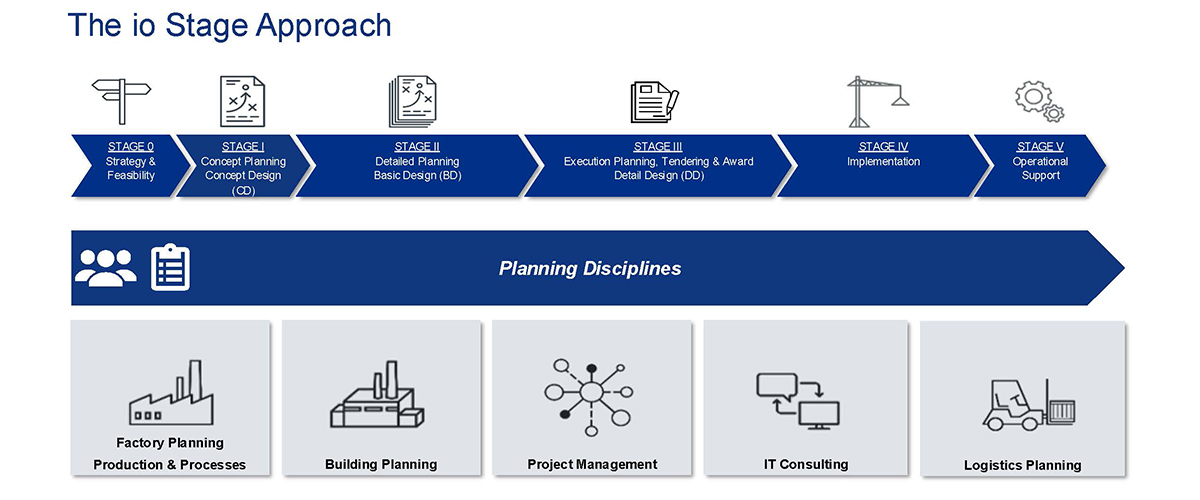
Our io phased model
The io phased model divides the project process into clearly defined phases (“stages”), ranging from strategy to operational support. Each phase has its own focus and key tasks.
Phase 0: Strategy & Feasibility ×
Focus: Project strategy, feasibility analysis, and site analysis
Key components:
- Site selection (site search/analysis)
- Data analysis
- Business case
- IT strategy
- Layer model
Phase I: Concept Design ×
Focus: Development of the overall concept and initial structural planning
Key components:
- Master plan
- System options & concepts
- Preliminary sizing
- Supply chain analysis
- Process mapping
- Requirements specification
- Business case
Phase II: Detailed Planning (Basic Design) ×
Focus: Development and refinement of previous concepts
Key elements:
- Refinement
- Detailing of processes/material flow
- Layout plan/detailed layout
- Preliminary design
- Value stream analysis
Phase III: Pre-construction Planning, Bidding & Award (Detailed Design) ×
Focus: Preparation for implementation and contract award
Key topics:
- Preparation of bidding documents
- Technical clarification and award
- Permit planning
- Assistance with contract awards
Phase IV: Implementation ×
Focus: Implementation and commissioning of the planned solutions
Key areas:
- Start-up management
- Implementation support
- Installation supervision
- Test management
- Commissioning
Stage V: On-the-job training ×
Focus: Post-completion support and warranty management
Key services:
- Property management (e.g., warranty management)
- Cost determination
- Property monitoring
The model guides project stakeholders through every stage, from strategic decision-making to operational implementation. Each phase ensures that decisions are made in a transparent manner and properly documented. Key areas range from project strategy and detailed planning and contracting to implementation and operational support.
Case Studies and Best Practices
Master Planning for Rangendingen – Erbe Elektromedizin GmbH
With the construction of its new production and development center in Rangendingen, Erbe Elektromedizin GmbH has set a new standard in modern factory planning. Under the leadership of io, the company’s largest investment to date (90 million euros) was realized on a 25,000-square-meter site. The new facility combines production, development, logistics, and administration in a single location. Particular emphasis was placed on maximum sustainability: The building meets the KfW Efficiency House 40 Plus standard, uses high-quality, eco-friendly building materials, employs renewable energy technology, and is equipped with one of the largest regional photovoltaic systems. The goal was to create optimal working conditions for up to 500 employees, strengthen the international location, and ensure sustainable manufacturing.
Cross-Industry Best Practices
- Lean Manufacturing: By implementing lean principles, companies were able to significantly reduce lead times and sustainably lower production costs.
- Flexible production layouts: The introduction of modular and flexible layouts allows for rapid adaptation to new market requirements and increases operational agility.
- Smart factory concepts: The use of automated processes and real-time data analysis leads to significant efficiency gains and better resource allocation.
These best practices demonstrate that well-thought-out factory planning not only reduces costs but also contributes significantly to sustainable, future-proof, and agile business processes. Pioneers such as Erbe Elektromedizin prove how resource-efficient construction and innovative production ensure long-term economic success and competitiveness.
Conclusion: Factory planning as a key to success
Well-thought-out factory planning increases efficiency, reduces costs, and ensures competitiveness. The right strategy—whether greenfield or brownfield—along with the use of modern technologies such as Industry 4.0 and digital twins, makes production facilities more flexible and sustainable.
With an experienced partner like io, you can develop customized solutions that meet a company’s specific requirements. Investing in smart factory planning today lays the foundation for successful and future-proof production.
Your contact

Rupert Hoecherl
Managing Director